Mood tracking is not instant. One entry is a snapshot. Two entries are a comparison. Several entries begin to show whether something repeats. That is why a mood tracker becomes more useful when it is easy enough to use lightly for more than one day.
The goal is not to collect perfect data. The goal is to build a simple baseline that makes your own days easier to understand.
One to three days: useful for awareness, early for patterns
In the first few days, the value is mostly reflection. You may notice that checking in helps you name your energy, remember what happened or slow down for a moment. That is useful, but it is still early to treat anything as a pattern.
A hard day after short sleep might matter. It might also be coincidence. More entries help separate a one-off day from something that keeps appearing.
Seven days: enough to start seeing a baseline
Around a week of light logging can start to show a personal baseline. You may begin to compare weekdays with weekends, better days with lower-energy days, or mornings with evenings. A 7-day view is not a final answer, but it can make the next question clearer.
At this stage, it helps to track a few signals together:
- Mood and energy
- Sleep quality and sleep duration
- Food, meals or timing when relevant
- Activities, routines and habits
- Short notes about context you want to remember
Fourteen days and beyond: better for repeated context
Two weeks can make repeated context easier to notice. You may see that a pattern is not about one habit, but about a combination: sleep plus timing, food plus schedule, social time plus recovery, or a routine that supports your day only when it happens consistently.
This is also why pressure can work against the point. If tracking becomes a chore, people stop before the pattern has time to appear.
Keep the check-in small enough to repeat
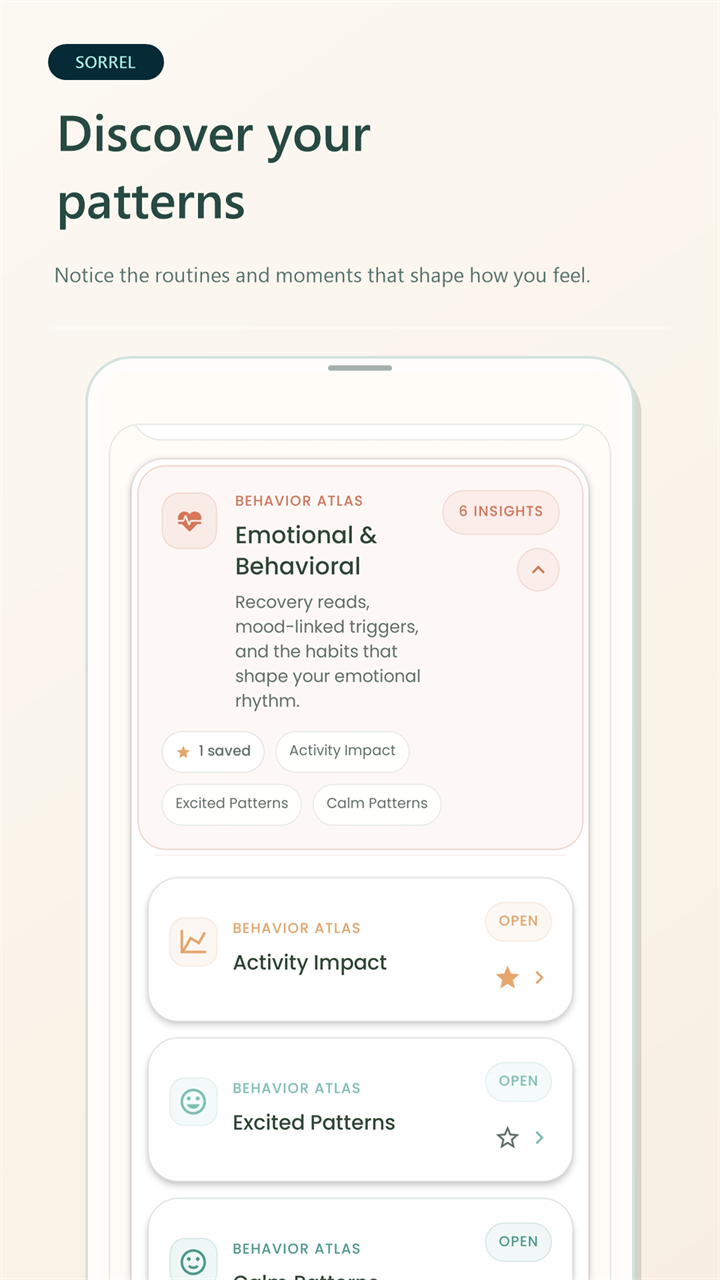
Sorrel is designed around light daily tracking. Start with mood and energy. Add sleep, food, habits or notes when they matter. Over time, those small entries can become a clearer view of what shapes your day.
The best mood tracking system is not the one with the most fields. It is the one you can actually use long enough to learn from.
Try Sorrel on Android if you want a calmer way to track mood, sleep, food and habits over time.
Get on Google Play